
Crafting and Enchanting in Creator Chronicles
Ore, equipment tiers, enchantment materials, and the blacksmith in the full build.
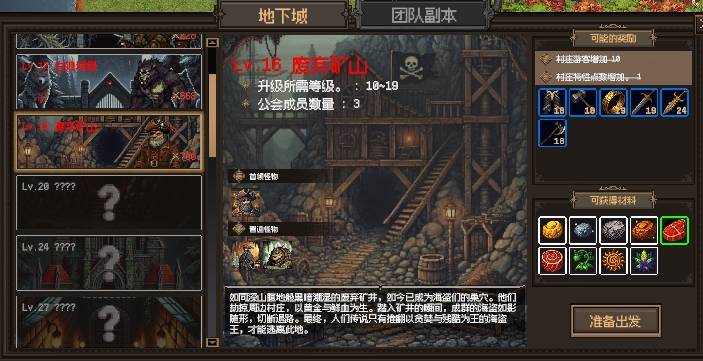
Equipment crafting and enchanting arrive with the full build as a vertical progression layer above the potion loop. You smith gear, then push it further with enchantment materials from dungeons and raids. This page covers the ore chain, equipment tiers, the enchantment system, and how crafting fits into the village economy alongside alchemy and food production.
The campaign is single-player. Crafted gear does not have a trading post or an auction slot; it equips to guild members directly. Enchantment materials drop from dungeons and raids, not from the auction.
The ore chain — copper to gold
The mine produces ore in ascending tiers: copper, tin, silver, then gold. Each tier requires the previous tier as an ingredient in larger quantities. The blacksmith workshop must be staffed and the ore chain must be flowing before crafting begins.
Copper and tin combine into bronze. Bronze is the early equipment tier for new members who are not yet in raid parties. Do not rush silver before you have a stable food supply and at least two combat-ready parties.
Silver equipment is the mid-game tier. It requires more ore per item and more food for miners, but silver gear meaningfully increases member survivability in normal dungeons and the easier raids.
Gold equipment is the late-game tier. It is expensive, time-intensive, and only worth pursuing once the village has a consistent gold income from dungeon clears and auction sales. Gold gear matters most for the 7 ultra-challenging raids.
Equipment crafting at the blacksmith
Open the blacksmith workshop (B → blacksmith tab) to see available recipes. Recipes unlock as the village level increases; the blacksmith does not offer gold-tier recipes on day one. Each recipe lists required materials, craft time, and the resulting equipment piece.
Equipment slots mirror typical RPG layouts:
- Weapon (class-gated: swords for Warrior and Knight, staves for Mage and Priest, daggers for Rogue, bows for Hunter, etc.)
- Armor (heavy for Warrior and Knight, cloth for Mage and Warlock, leather for Rogue and Hunter, hybrid for Druid)
- Accessory (ring or amulet with stat bonuses)
Craft for your active parties first. A spare set of silver armor for a bench member is lower priority than a weapon upgrade for your main tank.
Manual craft with right-click when you need one specific piece immediately. The queue auto-fills with whatever the blacksmith has materials for; right-click overrides the queue for a single item.
Enchantment system
Enchanting is a separate workshop building from the blacksmith. Once built, it takes equipment pieces and applies stat bonuses using enchantment materials. Enchantment does not replace crafting; it upgrades existing gear.
Materials for enchanting come from:
- Normal dungeon clears (common enchantment materials)
- Raid completions (rare enchantment materials)
- World events (varied materials depending on event type)
Enchantment has 3 tiers:
- Basic enchantment (common materials, small stat boost)
- Advanced enchantment (rare materials, meaningful stat boost)
- Master enchantment (rare materials from raids only, large stat boost)
Higher-tier enchantments require the equipment to already have the previous tier applied. You cannot apply Master enchantment to a fresh青铜 piece; it must go through Basic and Advanced first.
Crafting and the village economy
Crafting runs parallel to the potion loop, not instead of it. Keep alchemy producing potions while the blacksmith works on equipment. The two production lines share a constraint: both need guild members assigned to the relevant profession.
Alchemy herbalism and blacksmithing ore compete for member attention on a small roster. Early village plans should decide whether to prioritize potion supply (which affects every dungeon run) or equipment upgrades (which affect survivability in harder content). The practical answer is potions first, equipment second, until normal dungeons stop being a risk.
Enchanting materials from raids do not compete with potion ingredients. They come from a different content track. Once your parties can clear Raid 1 consistently, enchantment becomes the reason to run raids beyond the village trait points.
What changes at launch
The demo does not include equipment crafting or enchanting. These systems are full-build features that arrive with the 14 September 2026 Steam client. Demo-era parties are running on default gear from recruitment, not crafted equipment.
The 7 ultra-challenging raids assume crafted and enchanted gear on all party members. A party in bronze going into Raid 3 will wipe, regardless of class composition or skill loadout. Factor equipment upgrades into your raid prep timeline.
Three endings exist in the full build, gated by difficulty and conditions fulfilled. Crafting and enchanting are not ending-gated; they are available to every player who reaches the mid village. See launch notes for the ending structure and roadmap for the full system list.
Frequently Asked Questions
Quick answers for new guild masters.
Does the demo have equipment crafting?
No. Crafting and enchanting are full-build features arriving with the 14 September 2026 Steam launch.
What is the ore progression order?
Copper and tin (bronze tier) → silver tier → gold tier. The mine produces ore; the blacksmith converts ore to equipment.
Can I enchant any equipment piece?
Yes, but enchantment tiers must be applied in order: Basic, then Advanced, then Master. Each tier requires the previous one on the same piece.
Where do enchantment materials come from?
Common materials from normal dungeon clears, rare materials from raids and world events. Enchanting materials do not come from the auction.